
With the increasing popularity of solar energy, it’s important to understand the different types of solar panels available in the market. Solar panels are the heart of any solar power system, responsible for converting sunlight into usable electricity. In this comprehensive guide, we will explore the various types of solar panels, their unique characteristics, pros and cons, and help you make an informed decision for your solar energy needs.
Table of Contents
Types of Solar Panels:
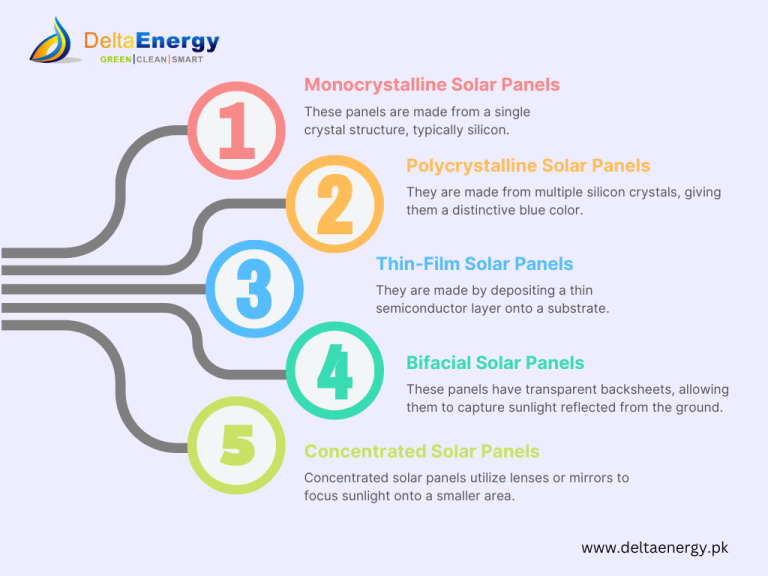
1. Monocrystalline Solar Panels: ( Most Recommended )
Monocrystalline solar panels are renowned for their high efficiency and optimal performance in different lighting conditions. These panels are made from a single crystal structure, typically silicon. The key advantages include:
Pros:
– High Efficiency: Monocrystalline panels have a high efficiency rate, ensuring maximum power generation in limited space.
– Versatile Performance: They perform well in various lighting conditions, including low light and cloudy days.
– Aesthetically Pleasing: Monocrystalline panels have a uniform black color and rounded edges, enhancing the visual appeal of your solar installation.
– Long Lifespan: These panels often come with warranties of 25 years or more, indicating their durability and longevity.
Cons:
– Higher Cost: Monocrystalline panels generally come with a higher upfront cost compared to other types of solar panels.
– Manufacturing Energy Footprint: The production process for monocrystalline panels requires more energy, contributing to a higher environmental footprint.
– Reduced Performance in High Temperatures: These panels may experience a slight drop in performance when exposed to extremely hot temperatures.
2. Polycrystalline Solar Panels:
Polycrystalline solar panels are a cost-effective alternative to monocrystalline panels. They are made from multiple silicon crystals, giving them a distinctive blue color. Let’s explore their pros and cons:
Pros:
– Cost-Effective: Polycrystalline panels are generally more affordable compared to monocrystalline panels.
– Decent Efficiency: While slightly lower than monocrystalline panels, polycrystalline panels still offer good efficiency and reliable power output.
– Wide Availability: These panels are widely available in the market and popular for residential and commercial installations.
Cons:
– Lower Efficiency: Polycrystalline panels have a slightly lower efficiency compared to monocrystalline panels, resulting in a larger physical footprint for the same power output.
– Reduced Aesthetics: The blue color and square-shaped cells of polycrystalline panels may not be as visually appealing as monocrystalline panels.
3. Thin-Film Solar Panels:
Thin-film solar panels are known for their flexibility and lightweight design. They are made by depositing a thin semiconductor layer onto a substrate. Let’s explore their pros and cons:
Pros:
– Flexibility: Thin-film panels are flexible and can be used in unique applications such as curved surfaces or portable solar devices.
– Lightweight: These panels are significantly lighter compared to crystalline panels, making them suitable for installations where weight is a concern.
– Design Versatility: Thin-film technology allows for more design flexibility and integration into various products and materials.
Cons:
– Lower Efficiency: Thin-film panels have a lower efficiency compared to crystalline panels, requiring a larger area for the same power output.
– Degradation Rate: They tend to degrade faster over time, resulting in a shorter lifespan compared to crystalline panels.
– Space Requirements: Due to their lower efficiency, thin-film panels may require more space for installations with specific power generation targets.
4. Bifacial Solar Panels:
Bifacial solar panels are unique as they can generate electricity from both sides of the module. These panels have transparent backsheets, allowing them to capture sunlight reflected from the ground or other surfaces. Let’s explore their pros and cons:
Pros:
– Enhanced Energy Capture: Bifacial panels can generate electricity from both direct sunlight and reflected light, increasing overall energy production.
– Higher Yield: These panels perform well in locations with bright surfaces, such as snow or gravel-covered grounds.
– Design Flexibility: Bifacial panels can be integrated into various applications, including elevated installations or vertical surfaces.
Cons:
– Higher Cost: Bifacial panels tend to be more expensive compared to traditional one-sided panels.
– Tracking and Mounting Considerations: To maximize their potential, bifacial panels require precise tracking systems and careful consideration during installation to optimize sunlight exposure.
5. Concentrated Solar Panels:
Concentrated solar panels utilize lenses or mirrors to focus sunlight onto a smaller area, intensifying the light reaching the solar cells. They are commonly used in large-scale solar power plants. Let’s explore their pros and cons:
Pros:
– High Efficiency: Concentrated solar panels can achieve high levels of efficiency by concentrating sunlight onto a smaller area.
– Power Generation in Low Light: They perform well even in low-light conditions due to their ability to focus and amplify available sunlight.
– Utility-Scale Applications: Concentrated solar panels are ideal for utility-scale solar installations, where large amounts of power are required.
Cons:
– Complex Design: The concentration mechanism requires precise tracking systems to follow the sun’s movement, making the design and installation more complex.
– Higher Cost: Concentrated solar panels involve additional components and infrastructure, resulting in higher initial costs compared to traditional solar panels.
Frequently Asked Questions:
1. Are monocrystalline panels worth the higher cost?
– While monocrystalline panels have a higher upfront cost, their higher efficiency and longevity often make them worth the investment, particularly when space is limited or aesthetics are a priority.
2. Are thin-film panels suitable for residential installations?
– Thin-film panels can be used for residential installations, especially when flexibility, lightweight design, or unique applications are desired. However, they may require more space due to their lower efficiency.
Conclusion:
Understanding the different types of solar panels is crucial when considering a solar energy system. Monocrystalline and polycrystalline panels offer reliable performance and cost-effectiveness, while thin-film panels provide flexibility and lightweight design options. Bifacial panels and concentrated solar panels offer unique features for enhanced energy production in specific settings. By weighing the pros and cons of each type, you can make an informed decision that aligns with your specific requirements, budget, and goals for renewable energy.
Disclaimer:
The information provided in this article is for informational purposes only and should not be considered as professional advice. It is recommended to consult with solar energy experts or manufacturers for personalized guidance based on your specific circumstances.