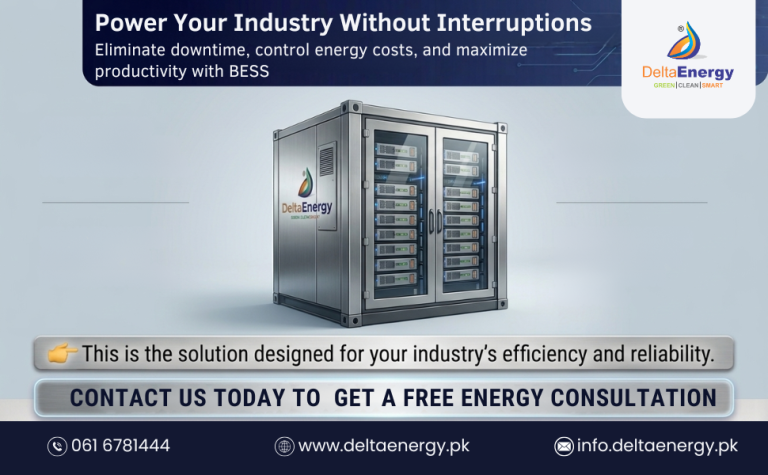
Pakistan’s energy sector presents unique challenges for businesses. Unpredictable load shedding disrupts operations, peak demand charges inflate electricity bills, and the shift toward renewable energy creates new complexities in power management. Traditional solutions like diesel generators are expensive, polluting, and require constant maintenance.
Delta Energy brings you a smarter alternative: Battery Energy Storage Systems (BESS). This technology is transforming how forward-thinking businesses manage their energy needs—cutting costs, ensuring reliability, and maximizing the value of renewable investments.
What is BESS?
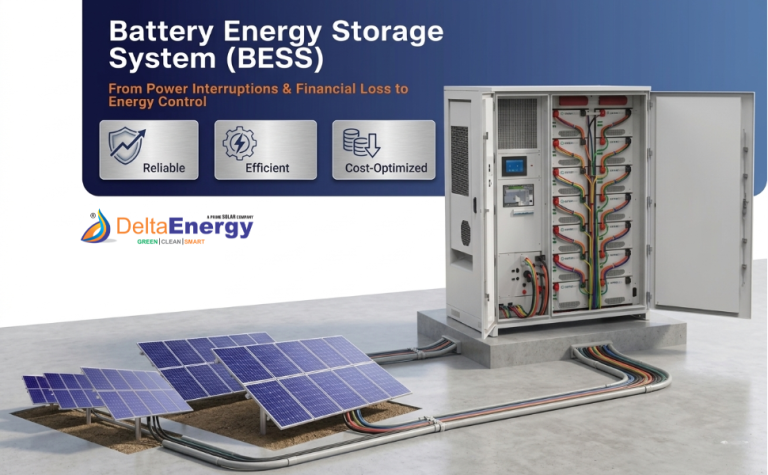
Battery Energy Storage System (BESS) is a technology that stores electrical energy in large-capacity battery banks for later use. Unlike a standard UPS that provides backup for minutes, or a generator that burns fuel on-demand, BESS stores grid electricity or solar power during off-peak hours and releases it strategically when you need it most.
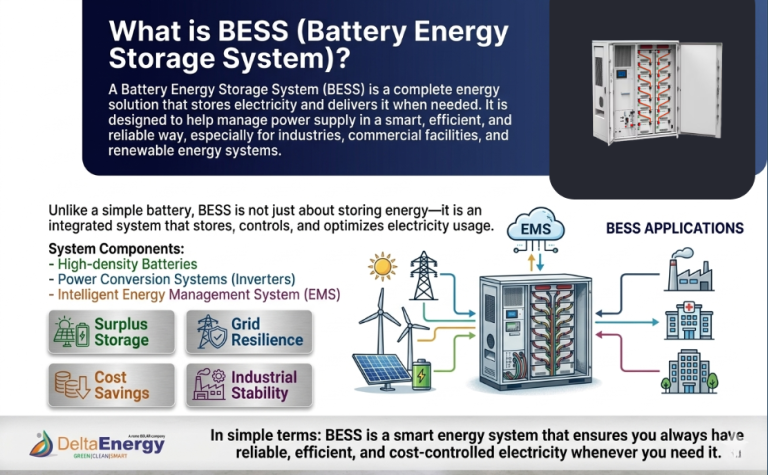
Think of it as a massive, intelligent power bank for your entire facility. The system charges itself when electricity is cheapest (typically late night and early morning), when your solar panels are producing excess power, or whenever the grid is stable. Then it automatically supplies your operations during expensive peak hours, during outages, or whenever your energy demands spike.
The core components include lithium-ion battery modules (similar to electric vehicle batteries but scaled for commercial use), power conversion equipment that manages charging and discharging, and intelligent software that optimizes when to store and when to release power based on your consumption patterns and electricity pricing.
Why Your Business Needs BESS
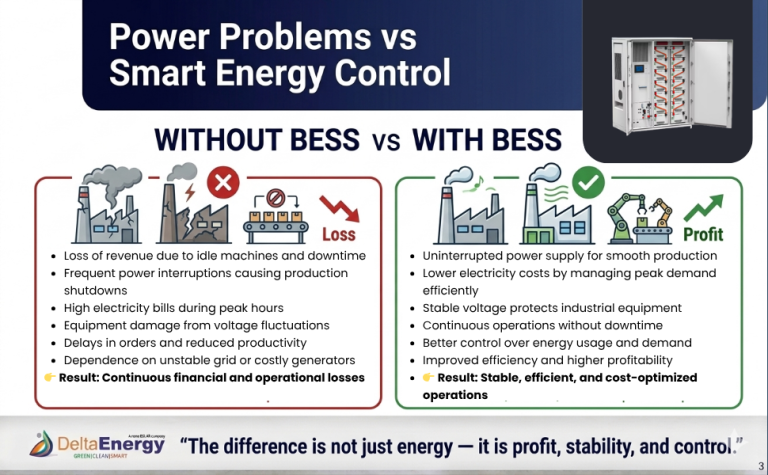
Every business in Pakistan faces the same energy challenges: crushing peak demand charges that consume 40-50% of your electricity bill, unexpected load shedding that shuts down production lines and spoils inventory, solar panels that generate power when you don’t need it and sit idle during your actual peak hours, diesel generators that cost a fortune to maintain while polluting your facility, and wildly unpredictable energy costs that make budgeting impossible. These aren’t minor inconveniences—they’re bleeding your profits every single month. BESS transforms each of these costly problems into competitive advantages, giving you control over your energy spending and operations in ways that traditional power systems simply can’t match.
How BESS Works
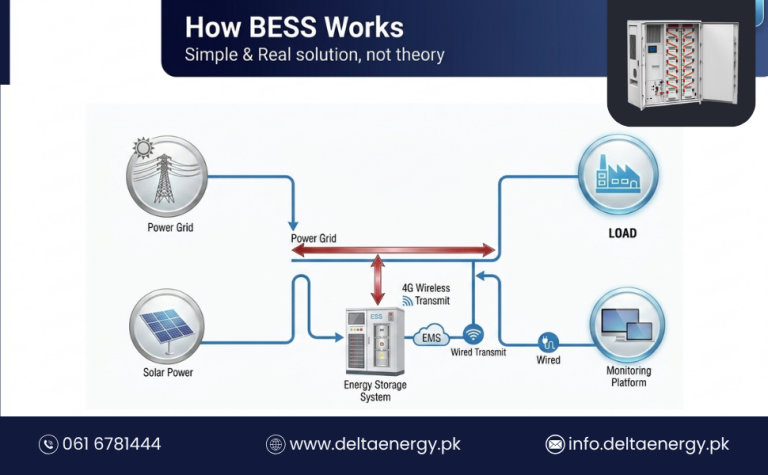
Understanding the technology doesn’t require an engineering degree. Here’s what happens in practice:
Step 1: Intelligent Charging
The system monitors electricity rates in real-time and charges the battery bank when power is cheapest—typically between midnight and 6am when industrial demand is low. If you have solar panels, it also captures excess generation during peak sun hours. The charging happens automatically without any input from you.
Step 2: Smart Energy Management
Built-in software learns your facility’s consumption patterns over time. It knows when your peak usage occurs, what your typical load looks like, and how much backup capacity you need. Based on this data and current electricity pricing, it makes split-second decisions about when to supply power from batteries versus drawing from the grid.
Step 3: Seamless Power Delivery
During expensive peak hours or grid failures, the system switches to battery mode. This transition takes 15-20 milliseconds—so fast that sensitive electronics can’t detect any interruption. Your operations continue without any noticeable change. Equipment doesn’t reset, production doesn’t pause, computers don’t restart.
Step 4: Continuous Optimization
The system isn’t static. It adapts to seasonal changes in your consumption, adjusts to new electricity tariffs, and optimizes its charging/discharging cycles to maximize your savings. You can monitor everything through a simple dashboard showing real-time performance, savings accrued, and system health.
Step 5: Automatic Maintenance
Temperature control systems keep batteries within optimal operating range (critical in Pakistan’s varying climate). Built-in diagnostics run constantly, identifying potential issues before they become problems. The system alerts Delta Energy if anything needs attention, often resolving issues remotely before you even notice.
The Physical Setup
The battery modules are housed in weatherproof enclosures sized based on your energy needs—ranging from a small room-sized unit for commercial buildings to shipping-container-sized installations for large industrial facilities.
Power conversion equipment (inverters) connects your electrical panel to both the batteries and the grid, managing the flow of electricity in both directions.
All of this integrates with your existing electrical infrastructure—we’re not rebuilding your facility’s power system, just adding intelligent storage and management to what you already have.
Installation typically takes 2-4 weeks depending on system size, and your facility continues operating normally throughout the process.
Who Needs This
Factories and Manufacturing Plants
You’re running shifts around the clock, operating heavy machinery, and probably getting hammered on demand charges. BESS pays for itself quickly in industrial settings.
Hospitals and Clinics
Patient care can’t wait for a generator to warm up. You need instant, reliable backup power for operating rooms, ICUs, and critical equipment. Plus, you’ll save significantly on your regular power bills.
Hotels and Commercial Buildings
Your peak consumption hits during the evening and early morning—exactly when electricity is most expensive. Guest comfort is non-negotiable, and power outages are reputation killers.
Cold Storage and Food Processing
A few hours without power can mean spoiled inventory worth lakhs. The math on backup power is simple here, and the demand charge savings are substantial.
Telecom Towers and Data Centers
You already have backup systems, but diesel generators are expensive to run and maintain. BESS is cleaner, quieter, and often cheaper over the system’s lifetime.
Agricultural Operations
Irrigation pumps, processing equipment, cold storage—farms are increasingly energy-intensive. Off-grid or unreliable grid connections make BESS especially valuable in rural areas.
How We Work
We Size It Right
We need to understand your actual energy consumption, your peak patterns, your backup power requirements, and your budget constraints. That takes time and honest conversation. We’ll analyze your electricity bills, visit your site, and run the numbers before recommending a system size.
We Use Proven Equipment
The BESS market has plenty of vendors making big promises. We work with manufacturers who have thousands of installations worldwide and honor their warranties. Battery technology is mature now, but you still need reliable partners who’ll be around in 10 years when you need support.
We Handle the Details
Permitting, grid interconnection approvals, electrical work, system integration, commissioning, training your team—there are a lot of moving parts. We manage the entire process so you don’t have to become an energy storage expert.
We Stick Around
The sale isn’t the end of our relationship; it’s the beginning. These systems need monitoring, occasional maintenance, and periodic optimization. We provide remote monitoring, annual service visits, and performance tuning to make sure you’re getting the savings you expected.
We Know Pakistan
WAPDA regulations, tariffs, provincial policies, local contractors, import procedures, climate considerations—we’ve navigated all of it. That local knowledge matters when you’re making a significant infrastructure investment.